




Winter roof damage in Nebraska occurs when ice dams, heavy snow loads, freezing temperatures, and freeze-thaw cycles crack shingles, destroy flashing, and force water into the home. The most common cause is ice dam formation due to poor attic insulation and inadequate ventilation.
Winter roof damage in Nebraska affects thousands of homeowners every year. Nebraska winters bring heavy snow, ice dams, and freeze-thaw cycles that destroy roofs fast.
This guide gives Omaha and Lincoln homeowners clear, expert answers. You will learn what causes damage, how to prevent it, and when to call a professional.
Why Nebraska Winters Are Unusually Hard on Roofs
Nebraska sits in a climate zone where Arctic air masses collide with warmer Southern systems. This creates extreme, unpredictable weather that accelerates roof wear faster than most homeowners expect.
Winters in Nebraska and winters in Omaha, Nebraska specifically, are defined by four damaging forces:
- Freeze-thaw cycles: Temperatures swing 30 to 40 degrees within 24 hours. Shingles expand and contract repeatedly, opening microscopic cracks.
- Heavy wet snow: A cubic foot of wet Nebraska snow weighs up to 20 pounds. Six inches on a 2,000-square-foot roof adds over 25,000 pounds of load stress.
- Wind-driven moisture: Nebraska winds drive moisture horizontally under shingles and around roof flashings.
- Prolonged sub-zero cold: Extended cold snaps freeze moisture trapped in roofing materials and accelerate cracking.
Nebraska Winter Fast Fact
Omaha averages 28 inches of snowfall per year. Lincoln averages 26 inches. Both cities experience multiple freeze-thaw cycles every winter month, each one a direct threat to an aging or under-maintained roof.
5 Types of Winter Roof Damage Nebraska Homeowners Face
1. Ice Dams: The Most Destructive Winter Problem
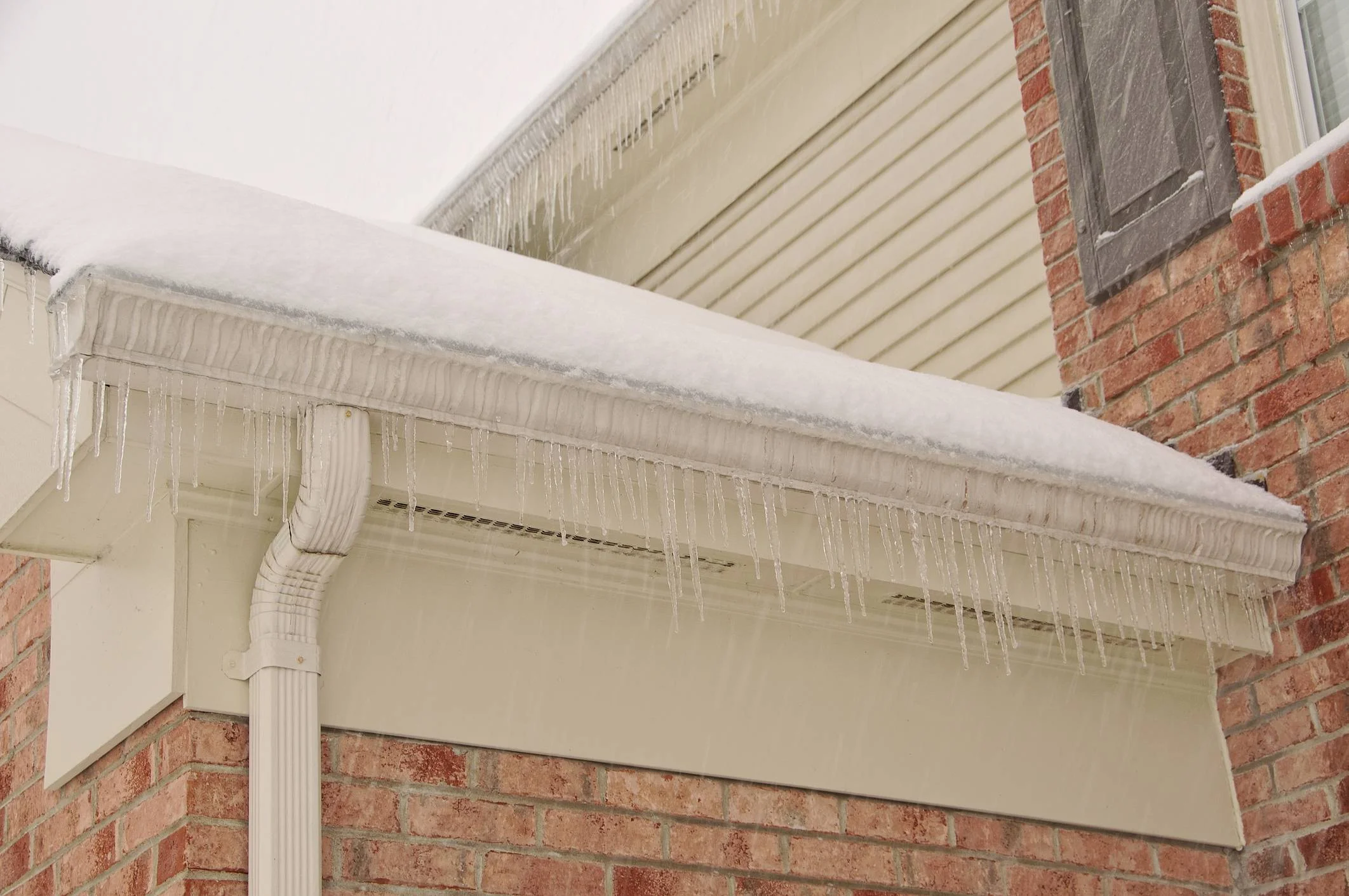
Ice dam roof damage in Nebraska is the leading cause of interior water damage during winter. An ice dam forms when heat escapes from your attic, warms the roof, and melts snow. That meltwater runs to the cold eave and refreezes.
The resulting ice ridge traps water behind it. That water has nowhere to drain. It forces its way under shingles, into the roof deck, and down through ceilings.
Ice dams cause all of the following:
- Shingle lifting as expanding ice wedges under roofing material
- Roof deck rot from sustained moisture contact
- Gutter damage as heavy ice pulls them away from the fascia
- Attic insulation saturation, wet insulation loses up to 40% of its R-value
- Interior ceiling stains, drywall damage, and mold growth
Important: You do not need a blizzard for ice dam roof damage in Nebraska. A six-inch snowfall followed by sunny days and cold nights is enough. This cycle happens repeatedly every winter in Omaha and Lincoln.
2. Snow Load Stress and Structural Risk

Nebraska residential roofs are typically engineered for 20 to 30 pounds per square foot of snow load. Wet Nebraska snow regularly pushes past this threshold.
Watch for these warning signs of excessive snow load:
- Visible sagging along the roofline
- Cracking or popping sounds from the attic structure
- Doors and windows that suddenly stick or will not close
- Bowing or warping of the ceiling below the attic
If you notice any of these signs, contact a licensed Nebraska roofing contractor immediately.
3. Shingle Cracking and Granule Loss
Asphalt shingles become brittle below 40 degrees Fahrenheit. They crack from impact, wind, or even thermal stress alone. This exposes the felt underlayment and roof deck to moisture.
Upgrade option: Class 4 impact-resistant shingles (UL 2218 standard) stay flexible in cold temperatures. They outperform standard shingles significantly in Nebraska winter conditions.
4. Flashing Failures Around Penetrations
Metal flashing seals joints at chimneys, skylights, vent pipes, and walls. Nebraska’s freeze-thaw cycles cause metal to expand and contract constantly. Sealants crack. Flashing pulls away from the surface.
A failed flashing is one of the most common hidden causes of cold-weather roof problems in Omaha and Lincoln homes.
5. Attic Condensation and Roof Deck Rot
Warm indoor air rises into a cold, under-insulated attic. It condenses on the cold roof deck, the structural wood beneath your shingles. Over time, this rots the deck from the inside.
Condensation also creates ideal conditions for mold growth inside your attic. The fix requires both insulation upgrades and balanced ventilation.
Attic Insulation and Ice Dam Prevention in Nebraska
Attic insulation is your primary defense against ice dam formation. If your attic is properly insulated, heat cannot escape and warm the roof. The roof stays cold. Snow does not melt unevenly. Ice dams cannot form.
Nebraska insulation standard: The U.S. Department of Energy recommends R-49 to R-60 for Nebraska attics. Many older Omaha and Lincoln homes have R-19 or less, below the threshold needed to prevent ice dams.
Effective attic insulation ice dam prevention in Nebraska requires four steps:
- Upgrade blown-in insulation to R-49 or higher using cellulose or fiberglass material.
- Air-seal all attic penetrations, electrical boxes, light fixtures, plumbing stacks, and HVAC vents.
- Install continuous soffit-to-ridge ventilation to maintain a consistently cold attic space.
- Add an ice-and-water shield membrane along the lowest three to six feet of every eave line.
These steps eliminate the conditions that create ice dams. They also reduce heating costs and extend roofing material life. Some upgrades qualify for Nebraska energy efficiency rebates.
Does Insurance Cover Snow Damage to Your Roof in Nebraska?

Short Answer
Most Nebraska homeowner’s insurance policies cover winter roof damage caused by sudden events, including snow load collapse, ice dam leaks, and wind damage. However, damage caused by deferred maintenance or poor attic insulation is typically excluded.
What Nebraska Policies Typically Cover
- Roof damage from the sudden weight of ice or snow, causing structural failure
- Interior water damage from an ice dam that produces an abrupt roof leak
- Shingle and structural damage from high winds during winter storms
- Emergency temporary repairs to prevent further damage after a covered event
What Nebraska Policies Typically Exclude
- Damage that developed gradually due to age, wear, or lack of maintenance
- Ice dam damage is linked to pre-existing insulation or ventilation problems
- Cosmetic damage that does not affect structural performance
- The cost of ice dam removal itself is in most standard policies
Critical action step: Photograph all damage immediately after a storm. Contact your insurer right away. Then call a licensed Nebraska roofing contractor before any repairs begin. A contractor experienced with Nebraska insurance claims ensures all covered damage is properly documented.
Winter Roof Repair Costs in Nebraska: 2025–2026 Estimates
The following ranges reflect typical costs for Omaha and Lincoln homeowners. Actual pricing depends on roof size, damage severity, material type, and access conditions.
|
Repair Type |
Cost Range |
Notes |
|
Professional ice dam removal |
$300 – $1,500 |
Varies by dam size and roof access |
|
Flashing repair or replacement |
$200 – $600 |
Per location (chimney, vent, etc.) |
|
Shingle replacement (partial) |
$150 – $600 |
Per 100 square feet |
|
Roof deck repair |
$500 – $1,500 |
For rot or water-damaged sections |
|
Attic insulation upgrade |
$1,500 – $4,000 |
Full attic, blown-in application |
|
Interior ceiling/drywall repair |
$500 – $5,000+ |
Varies widely in extent |
|
$8,000 – $18,000+ |
Based on size and materials |
Cost of inaction: A $300 ice dam removal prevents what can become $5,000 or more in interior water damage, mold remediation, and structural repair. Acting early is always the lower-cost decision.
Nebraska Winter Roof Protection Checklist
The best protection against Nebraska winter roofing tips going wrong is a fall maintenance routine. Complete this checklist every October:
- Schedule a free professional roof inspection before the first snow.
- Clean gutters after leaves fall so meltwater can drain freely.
- Check and upgrade attic insulation to R-49 or higher if your home is over 15 years old.
- Confirm soffit and ridge vents are clear of debris and provide airflow.
- Inspect flashing at chimneys, skylights, and vent pipes for cracks or gaps.
- Purchase a roof rake for safe, ground-level snow removal after heavy storms.
- Consider installing heat cable along eave lines if your home has an ice dam history.
- Review your homeowner’s insurance policy to understand your winter damage coverage.
Why Nebraska Homeowners Trust Star Home
Star Home is a Lincoln, Nebraska-based residential roofing company. We serve homeowners across Nebraska and Western Iowa. Our team has over 30 years of combined construction experience.
We are not a national chain. We live and work in the same communities we serve: Omaha, Lincoln, Grand Island, Bellevue, Fremont, and dozens of surrounding areas.
What makes Star Home the right choice for winter roof damage in Nebraska:
- Free roof inspections with no obligation, we give you an honest assessment, not a sales pitch.
- Fully licensed, bonded, and insured in Nebraska and Iowa with manufacturer certifications.
- Flexible financing with on-the-spot approvals, credit scores from 550 accepted, no money down required.
- 24/7 emergency response for active leaks, storm damage, and urgent structural issues.
- Workmanship warranty on every project, backed by a 100% satisfaction guarantee.
- Transparent pricing, no hidden fees, no pressure, full line-item breakdown before work begins.
Deep local knowledge of Nebraska climate, insurance processes, and regional building code requirements.
Conclusion: Protect Your Nebraska Home This Winter
Winter roof damage in Nebraska is not a matter of if, it is a matter of when. Ice dams, snow load, and freeze-thaw cycling threaten roofs across Omaha, Lincoln, and every Nebraska community every single winter.
The homeowners who avoid costly repairs are proactive. They inspect in the fall. They upgrade insulation. They do not wait for a water stain on the ceiling before making a call.
Winter roof damage in Nebraska is preventable with the right contractor and the right plan. Star Home is ready to help you protect your home with a free inspection, honest advice, and over 30 years of Nebraska roofing expertise.
Stay updated on our services and special offers. Connect with us on Facebook, Instagram, and Google My Business.
Contact us today to schedule your inspection or get a free quote.
FAQs
The most common winter roof damage in Nebraska is ice dam formation. Ice dams occur when heat escapes the attic, melts roof snow, and the water refreezes at the cold eave. The resulting ice ridge traps water and forces it under shingles, causing leaks, insulation damage, and interior water intrusion.
Look for icicles or ice buildup along the eave line, water stains on ceilings or walls, missing or cracked shingles, sagging rooflines, and granule deposits in gutters. Inside the attic, check for damp insulation, daylight through the roof deck, or frost on rafters.
Yes, most Nebraska homeowner’s insurance policies cover ice dam damage when it causes sudden, accidental water intrusion. Coverage typically applies to roof repairs and interior water damage. However, damage linked to deferred maintenance or pre-existing insulation problems is usually excluded. Document all damage immediately and contact your insurer promptly.
To prevent ice dams in Nebraska, upgrade attic insulation to R-49 or higher, seal all air leaks in the attic floor, ensure balanced soffit-to-ridge ventilation, and install an ice-and-water shield membrane along eave lines. These measures keep the roof deck cold and uniformly cold, stopping the melt-refreeze cycle that creates ice dams.
Winter roof repair costs in Nebraska range widely by damage type. Professional ice dam removal typically costs $300 to $1,500. Partial shingle replacement runs $150 to $600 per 100 square feet. Flashing repairs cost $200 to $600 per location. A full roof replacement ranges from $8,000 to $18,000 or more, depending on size and materials.