




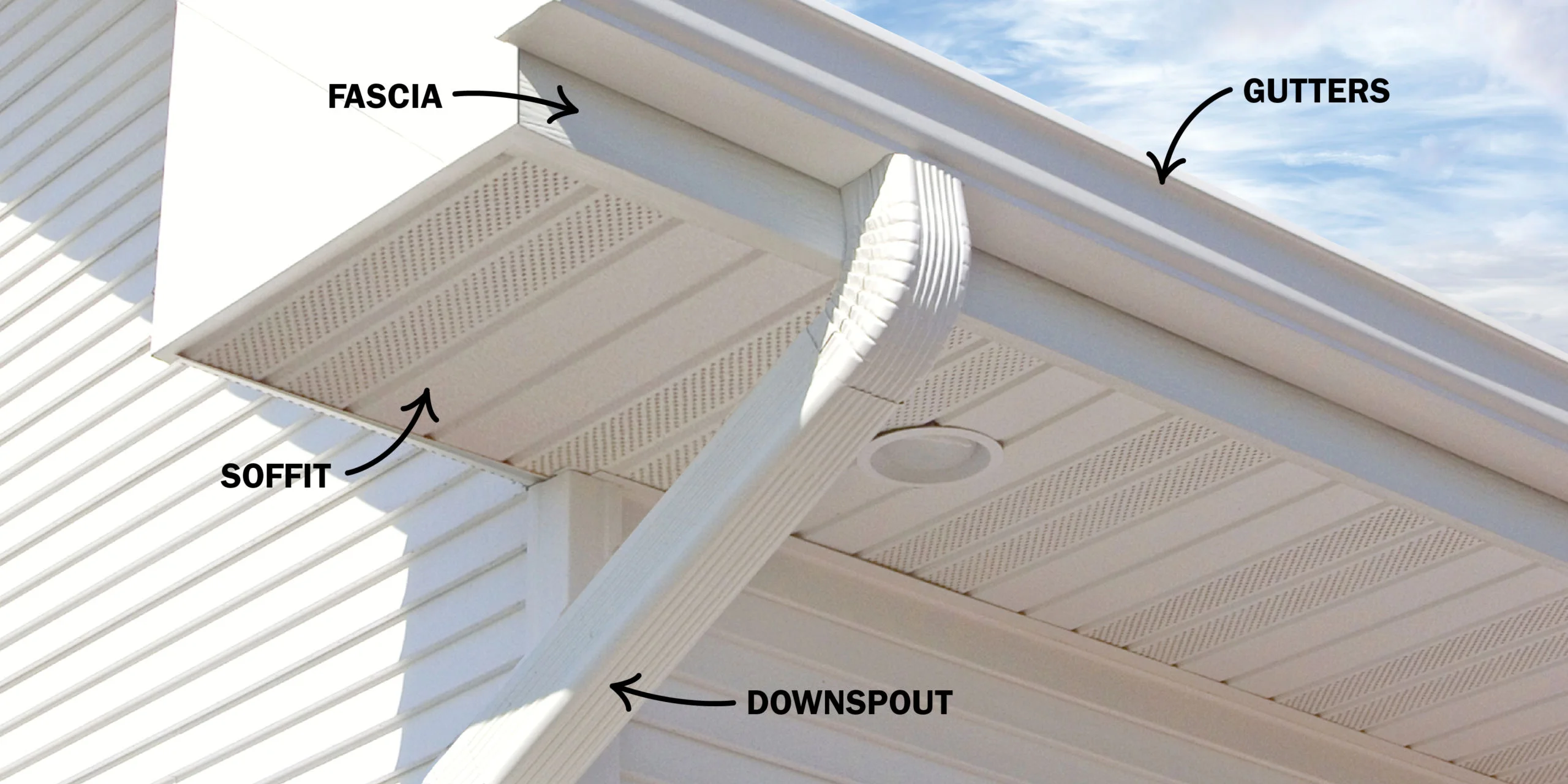
Fascia is the vertical board along your roof’s edge that supports gutters and seals the roofline. Soffit is the horizontal panel under your roof overhang that ventilates your attic. Both need regular soffit and fascia repair to prevent water damage, rot, and pest entry.
Soffit and fascia repair is one of the most overlooked parts of home maintenance in Lincoln, NE. These two roofline components protect your home from water damage, pests, and costly structural repairs. This guide explains the difference, the warning signs, and when to call a professional.
What Is Fascia?
Fascia is the long, straight board running along your roof’s edge. It sits behind your gutters and in front of your rafters.
Fascia supports your gutters, seals the roof deck from moisture, and gives your roofline a finished look. It takes constant exposure to water runoff, making it one of the first places where damage appears.
Common Fascia Materials
- Wood: Affordable, but prone to rot without sealing and maintenance
- Aluminum: Wraps over wood boards, resists rot, needs little upkeep
- Vinyl: Budget-friendly and moisture-resistant, but can crack in extreme cold
- Composite/PVC: Highly durable and rot-proof, though it costs more upfront
Nebraska’s temperature swings make material choice especially important for fascia longevity.
What Is Soffit?
Soffit covers the underside of your roof overhang. Look at the horizontal panel between your siding and the roof edge.
Soffit ventilates your attic through small built-in vents. This airflow keeps temperatures stable and prevents moisture from causing mold and rot.
Common Soffit Materials
- Vented aluminum: Durable, low maintenance, common across Nebraska roofs
- Vented vinyl: Affordable and rot-resistant, but can sag with age
- Wood: A classic look, but needs regular painting and sealing
Soffit vs. Fascia: Key Differences
- Location: Fascia runs vertically along the roof edge. Soffit runs horizontally underneath.
- Function: Fascia supports gutters and seals the roof edge. Soffit ventilates the attic.
- Visibility: Fascia is visible from the street. Soffit is visible from below.
- Damage triggers: Fascia damage often starts with gutter overflow. Soffit damage often starts with attic moisture.
Both pieces connect at the roofline. Damage to one often spreads to the other if ignored.
Why Both Matter Together
Fascia and soffit work as one system, not two separate parts. When fascia rots, gutters lose support and overflow. That overflow runs behind your soffit, soaking the wood framing above your walls. Roof edge water damage spreads quickly once it starts.
When the soffit fails, pests and moisture enter your attic freely. That moisture often rots fascia boards from the inside out. This connection is why professional soffit and fascia repair always treats both components as one system.
What Causes Soffit and Fascia Damage in Lincoln, NE
Nebraska weather is hard on rooflines. The most common causes we see across Lincoln and Western Iowa include:
- Soffit and fascia storm damage: High winds and hail can crack or tear loose panels during a single storm.
- Fascia damage from clogged gutters: Blocked gutters force water over the edge and down the fascia board.
- Rotted fascia after gutter overflow: Repeated overflow soaks the same section until the wood softens and rots.
- Ice dams: Winter ice buildup at the roof edge can pry fascia and gutters loose.
- Pest activity: Birds, squirrels, and insects widen small gaps in soffit panels over time.
- General age: Most systems last 20 to 30 years, depending on material and maintenance.
Signs You Need Fascia or Soffit Replacement

Catching damage early saves money. Watch for these warning signs:
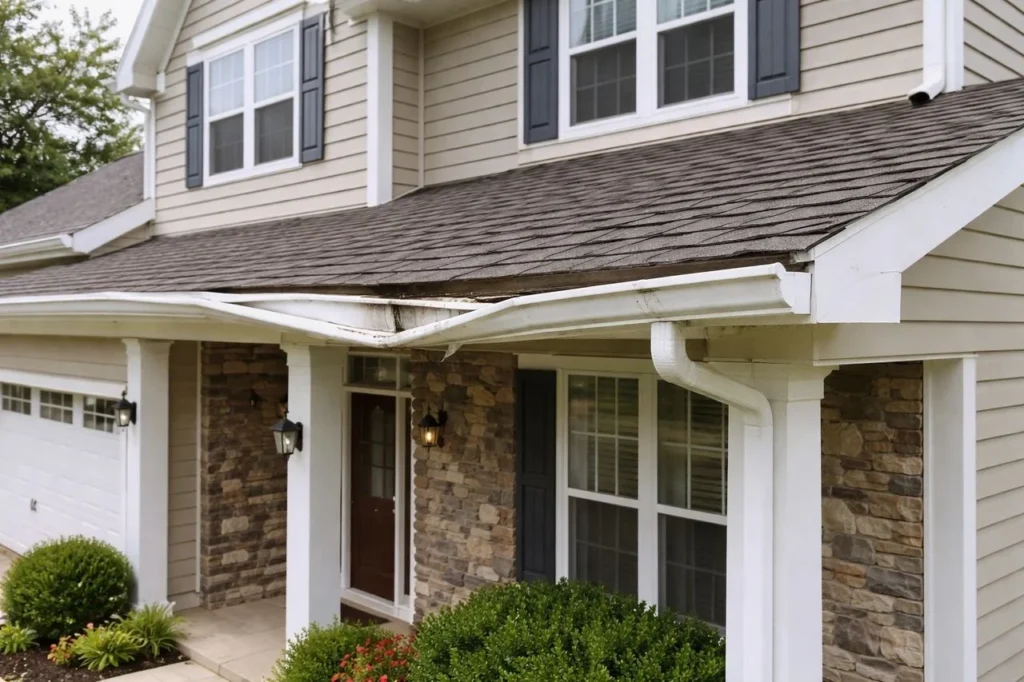
- Sagging or pulling-away gutters
- Soft, spongy, or crumbling wood when pressed
- Visible water stains on the siding below the roofline
- Peeling paint or bubbling on fascia boards
- Gaps, holes, or missing soffit sections
- Increased pest activity near the roofline
- A musty attic smell, often signaling trapped moisture
Two or more of these signs mean it’s time for a professional inspection.
Repair or Replace? How to Decide
Soffit and fascia repair does not always require full replacement.
When Spot Repair Works
Small, isolated damage can often be repaired instead of replaced. This works when:
- Less than 20% of a continuous run is affected
- The surrounding wood is still solid
- There is no structural sagging
When Full Replacement Makes Sense
Replacement becomes the smarter choice when:
- Rot has spread across multiple sections
- The wood framing behind the fascia is compromised
- Repeated repairs have already failed in the same spot
A professional inspection identifies which category your damage falls into. Patching without fixing the water source usually leads to repeated damage.
Who Should Repair Fascia and Soffit?
Soffit and fascia repair falls within a roofing contractor’s core expertise. Both components connect directly to your roofline and gutter system.
A qualified roofer inspects the roof deck behind the fascia, matches new materials to your gutters, and identifies ventilation problems. Carpenters can handle isolated wood repairs, but typically skip the connected roofing and gutter work.
Is Fascia Repair Covered by Insurance?
Coverage depends on what caused the damage.
Usually Covered
- Wind damage from a storm
- Hail impact
- A fallen tree branch
- Sudden ice dam damage
Usually Not Covered
- Gradual rot from years of clogged gutters
- General wear and aging
- Damage from skipped maintenance
Document storm damage with photos and contact your insurer promptly. A written inspection report from a local roofing contractor can support your claim.
How Much Does Fascia Repair Cost?
Soffit and fascia repair costs vary based on material, damage extent, and accessibility.
Average Cost Ranges
- Spot repair: The most affordable option for isolated, minor damage
- Fascia replacement: Typically priced per linear foot, based on material
- Soffit replacement: Usually priced per linear foot, with vented panels costing more
- Combined gutter and fascia work: Often more cost-effective when bundled together
Factors That Affect Your Price
- Material: Aluminum and composite cost more upfront but last longer
- Damage extent: Spot repairs cost less than full-run replacement
- Accessibility: Steep or multi-story rooflines increase labor time
- Gutter involvement: Removing and reinstalling gutters adds labor
- Hidden rot: Damage behind the fascia adds material and labor
The most accurate estimate comes from a free, in-person inspection rather than an online calculator.
Why Choose Star Home
Star Home is a locally owned roofing company based in Lincoln, Nebraska. We serve homeowners and businesses across Nebraska and Western Iowa.
Our team brings over 30 years of combined construction and roofing expertise. We specialize in skylight repair, roof flashing replacement, chimney flashing repair, and full roof services.
What Sets Us Apart
- Locally owned and operated. We live and work in the communities we serve across Nebraska.
- Licensed, bonded, and insured. Every project is completed by qualified professionals.
- Free estimates. No pressure, no hidden fees. You get a transparent, itemized quote.
- Workmanship warranty. We back every repair with a written workmanship guarantee.
- On-the-spot financing. Options available for credit scores as low as 550, no money down.
- 24/7 emergency response. We respond fast when you have an active roof leak.
-
Certified by trusted manufacturers. We use premium materials from leading industry suppliers.
Conclusion: Protect Your Roofline Before Small Damage Spreads
Soffit and fascia rarely fail all at once. Damage usually starts small, then spreads into your gutters, attic, and walls. If you’ve noticed any warning signs in this guide, don’t wait for the next storm. Star Home Contractor offers free roofline inspections throughout Lincoln, NE.
Reach out today for soffit and fascia repair in Lincoln, NE. Let’s protect your roofline together.
Stay updated on our services and special offers. Connect with us on Facebook, Instagram, and Google Business Profile.
Contact us today to schedule your inspection or get a free quote.
Frequently Asked Questions
Fascia is the vertical board along your roof’s edge. Soffit is the horizontal panel underneath your roof overhang. Fascia supports gutters, while soffit ventilates your attic.
Common signs include sagging gutters, soft or crumbling wood, peeling paint, and water stains on your siding. A musty attic smell can also signal hidden fascia damage.
Cost depends on material, damage extent, and accessibility. Spot repairs cost less than full-run replacement, and combining fascia with gutter work often saves money.
Minor, isolated damage can often be repaired. Full replacement is usually needed when rot has spread or the wood framing behind the fascia is compromised.
Storm damage, like wind or hail, is usually covered. Gradual rot from skipped maintenance or clogged gutters typically is not covered.